One million. That is how many AI computing satellites the US government just allowed SpaceX to put in orbit. The Federal Communications Commission approved the plan, called Starmind, on Wednesday, November 25, and the fight over it is only starting.
What the FCC approved
FCC Chairman Brendan Carr announced that SpaceX can deploy a constellation of 1 million satellites to work as space-based data centers, per CNBC. The agency said the satellites will "process massive amounts of data to be used back here on Earth," per The Washington Post. Politico reports the license runs 15 years. Under the terms, SpaceX must have at least one satellite in its assigned orbit by November 25, 2033 and all 1 million by November 25, 2040, per Engadget. Musk had said launches would start in 2027, per Engadget, so the schedule and the promise do not match yet.
The pitch: solar power in space
SpaceX argued in its filing that "orbital data centers are the most efficient way to meet the accelerating demand for AI computing power," because they run on solar power with little upkeep, per Engadget. Carr said the approval helps "extend America's lead" in AI and called it a "bold new frontier," per CNBC and Engadget. Musk replied on X that it "will be a great asset to America and the world," per CNBC. SpaceX applied in January, per Politico.
Who fought it
SpaceX's application drew petitions to deny from Amazon's Kuiper Systems, Viasat and the American Astronomical Society, per CNBC. Amazon, which is building a rival to Starlink, called Starmind a "lofty ambition rather than a real plan" in March and said it would take SpaceX "centuries" to build, per CNBC. FCC Chairman Carr answered that Amazon should focus on missing its own satellite deployment milestone, per CNBC. Amazon declined to comment on the approval. SpaceX did not respond to CNBC's request for comment.
The doubts
Critics question both the physics and the damage. Astrophysicist Adam Becker told CNBC that any serious attempt would pollute the night sky and risk a chain reaction of collisions and space junk. He also argued, per Engadget, that space is a vacuum, so heat can only leave by radiation, and that there are "basic physical limits" to doing that for so many satellites. Those are his views, not settled fact. Earthjustice attorney Jan Hasselman criticized the FCC for ruling in a holiday week without the environmental review he says the law requires, per CNBC. The FCC said it dismissed comments on topics outside its authority, including environmental concerns and impact on optical astronomy, per CNBC.
Others want orbit too
SpaceX is not alone. Google announced Project Suncatcher, a "moonshot to put AI in space," and launched its first chips into space in October, per CNBC. Blue Origin asked the FCC in March to approve up to 51,600 satellites for its own constellation, per CNBC. Carr said competitors would also use solar power for AI, per CNBC.
SpaceX's own caution
The company itself has been careful. Bloomberg reported that SpaceX has cautioned that orbital AI data centers rely on unproven technologies and may never be commercially viable, per Bloomberg. That warning sits next to an idea Bloomberg says was central to Musk's pitch to investors before SpaceX's IPO in June. So the approval gives SpaceX a legal path, but not a working product.
What to watch next
Watch for legal challenges, since opponents have already raised environmental process. Watch whether SpaceX starts launches in 2027 as Musk said, and whether the first satellites carry real AI chips. Also watch how the FCC treats Blue Origin's request and any move from Amazon.
Why it matters
AI needs huge amounts of power and water, and the industry is looking for new places to put computers. The US government has now said yes to the biggest orbital plan on paper. But a license is permission, not proof. SpaceX has to build and launch hardware that critics say may hit hard heat limits, in a sky that astronomers already say is crowded. The approval is real. Whether space data centers work is still unproven.
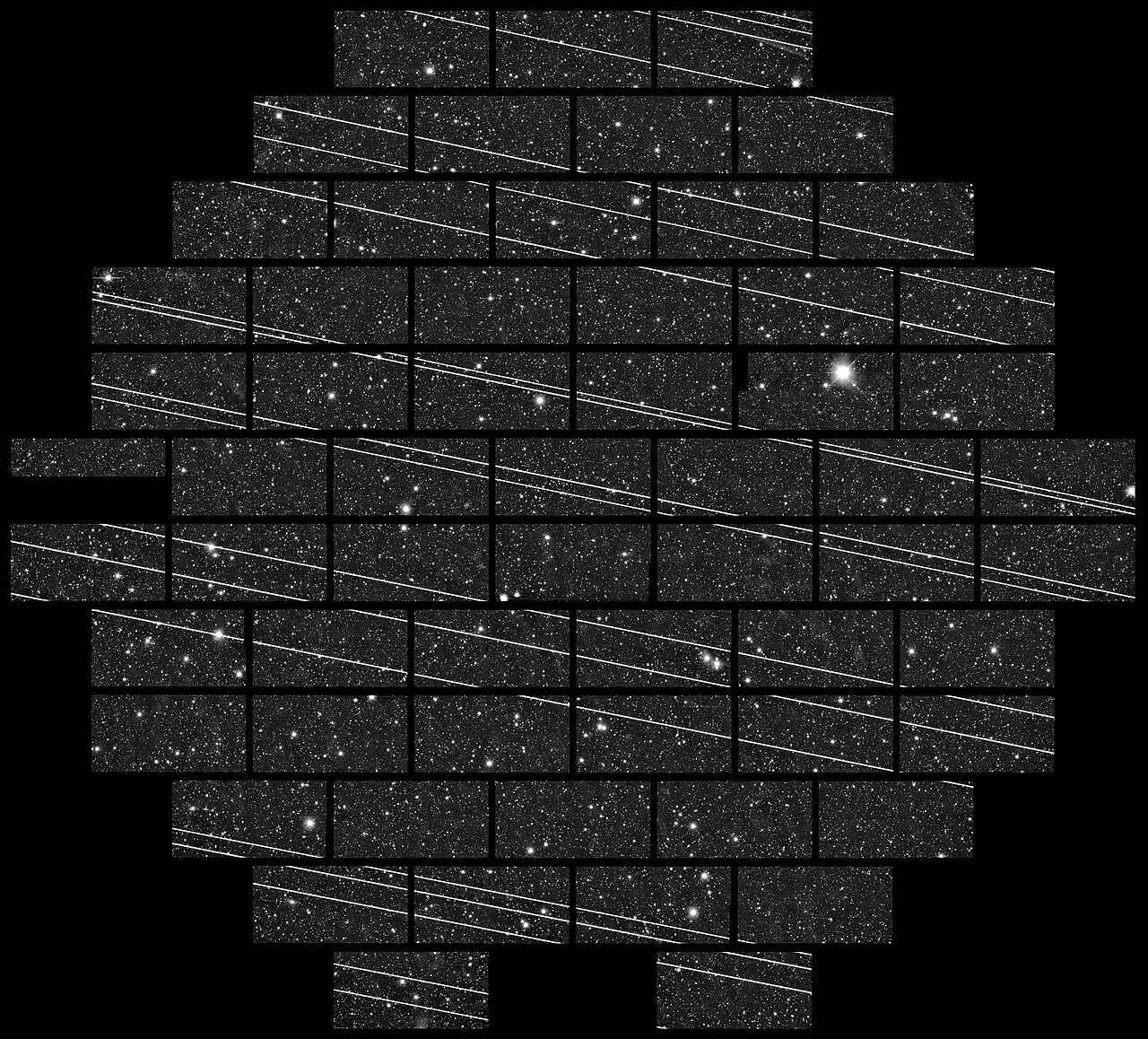
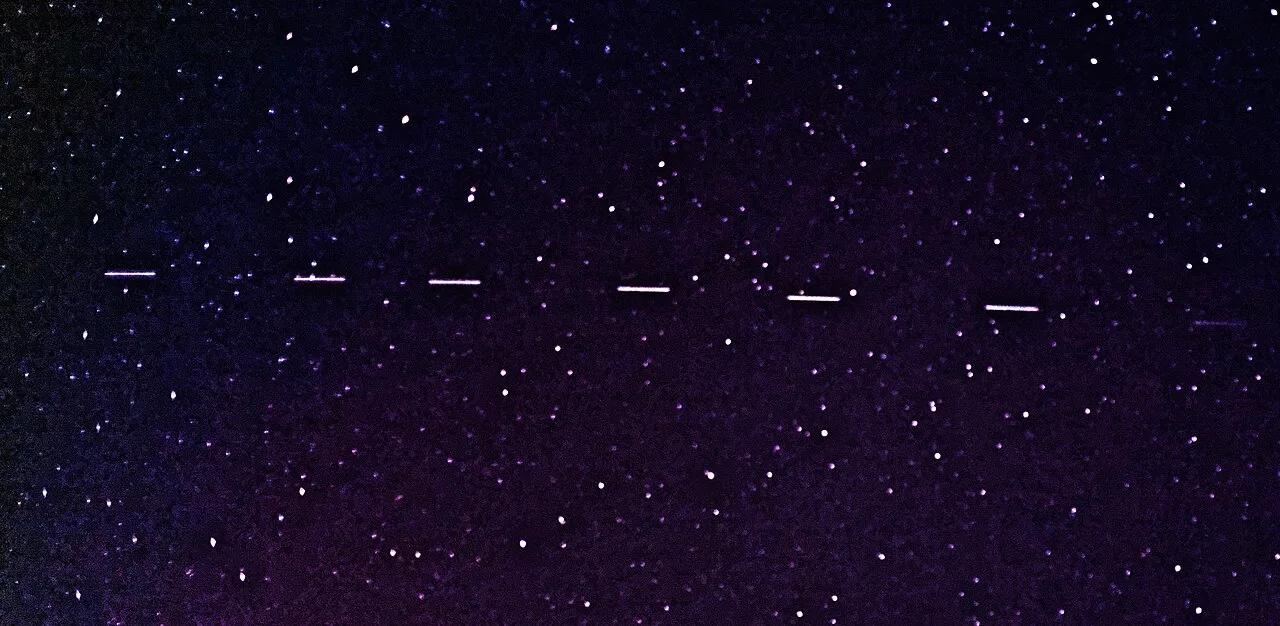
Cover image: Starlink satellite streaks imaged from CTIO by NSF's NOIRLab/CTIO/AURA/DELVE, CC BY 4.0, via Wikimedia Commons. Archive image from 2019 showing Starlink streaks across an astronomical exposure, not the new constellation.