Nvidia is the biggest name in the AI boom, and one of the three major credit rating agencies now says its management and board oversight are a risk. S&P Global Ratings put Nvidia's AA credit rating on downgrade watch on Wednesday, and the stock is already far below where it was in early October.
What S&P said
S&P Global Ratings on Wednesday placed Nvidia's credit rating on "CreditWatch Negative," signaling a high likelihood of a downgrade, citing rising management and governance risks, per Reuters. The departure, then reinstatement of CEO Jensen Huang does not sufficiently answer its questions about board oversight of the executive code of conduct, the agency said.
According to TechCrunch, S&P pointed to "weak executive oversight and lack of succession planning" and "key man risk," meaning heavy reliance on Huang. RTÉ quotes S&P: "We believe the long tenure of certain board members may have compromised their independence. The company's corporate governance practices may also not have kept pace with Nvidia's rapid growth and its role as a critical global technology enabler."
S&P expects to finish its review within 90 days and could cut the rating from AA to AA-, per TechCrunch. It stressed that Nvidia's financial performance is strong and that it will keep an investment-grade rating.
How we got here
RTÉ reports that Nvidia's board reinstated Huang as CEO on Monday, days after he resigned following reports about his personal conduct. The newly elected board chair had told investors the week before that Nvidia would not rehire him because his behavior was inconsistent with the company's code of conduct, per RTÉ. In announcing the reinstatement, Nvidia said the move was "based on US government input," and an independent board committee is still investigating, according to the same report.
Reuters reported that the Justice Department did not conduct a formal investigation into Huang before President Donald Trump pushed for his return, and concluded from probes into two Nvidia clients that there was no evidence he broke any laws, a finding that could change as the probes continue, per RTÉ. We have not independently verified those claims, and they are reported by the outlets cited.
The stock
Per BeInCrypto, citing CNBC, Nvidia jumped 31.5% on Monday to close at $165.05 after the reinstatement, then fell 3.9% on Wednesday to close at $149.30, about 9.5% below Monday's close. RTÉ says shares are down 38% since October 6, and that the Nasdaq 100 briefly came close to a 20% drop from its recent high on Wednesday. Investors were largely unruffled by the S&P move, per RTÉ.
Why a credit rating matters for AI
A downgrade would not threaten Nvidia's investment-grade status, but it can raise borrowing costs. TechCrunch explains that Nvidia backstops neoclouds and other AI infrastructure firms that lack strong credit on their own, so a lower rating could make their debt costlier or force them to post more collateral.
In August, Nvidia announced plans to arrange $500 billion in financing for AI infrastructure with six financial institutions, including Goldman Sachs, Apollo and Blackstone. Under the original terms Nvidia would guarantee 25% of the loans, and Bloomberg reported that lenders were already asking for more before Huang's ouster. A downgrade would likely push lenders to ask for larger guarantees, per TechCrunch.
What to watch next
Watch the 90-day S&P review and any board changes. BeInCrypto reports that Huang is due for a closed-door House interview on December 1 and Senate Banking Committee testimony on December 3. We could not confirm those dates in a second source, so treat them as reported. Also watch for moves by Moody's or Fitch and for any change to lenders' guarantee demands.
Why it matters
Nvidia chips sit under most of the AI buildout, and Nvidia's balance sheet sits under a lot of the financing. When the company's governance becomes a credit question, it touches the cost of building AI data centers, not just one stock. This is not a prediction of a downgrade or of where the shares go. It is a reminder that the AI trade depends on trust in a small number of companies and people. This article is not investment advice.
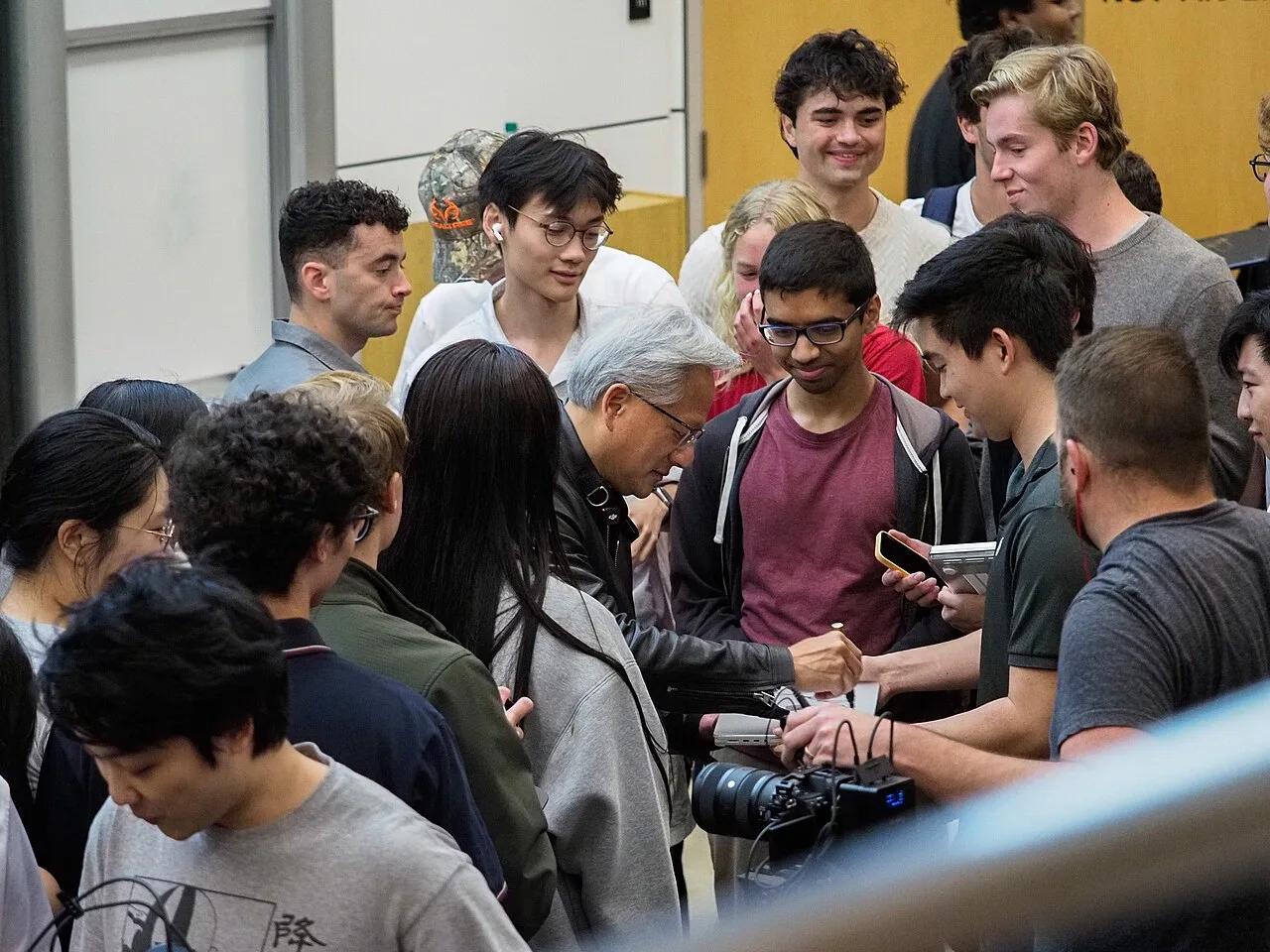
Cover image: Jensen huang stanford 2026-04-30 001 by Anders Eidesvik, CC BY 4.0, via Wikimedia Commons. Jensen Huang at a Stanford talk on April 30, 2026, not a photo from the events described.