A run of AI-made math results is now feeding a bigger question: could AI soon settle P vs NP, the problem that underpins modern encryption? Axios reports that rumors are swirling about what AI labs may be keeping under wraps. The facts behind the buzz are real and checkable. The cryptography fears, so far, are speculation.
The Riemann proof is certified
On November 20, Anthropic mathematician Levent Alpöge said he used the company's Claude model to prove the Riemann hypothesis, posed in 1859. Per Scientific American, the proof was written in Lean, a language that lets a computer check each logical step, and independent researchers compiled it successfully. MIT mathematician Andrew Sutherland told the magazine that "the chance that anything is fishy here is approximately zero." Nature reports that the proof ran to about 17 million lines of Lean code, that the Lean and Mathlib communities said on November 21 they had "full confidence" it is correct, and that a separate group of mathematicians quickly produced a human-written proof. Some mathematicians quoted by Nature note that it will take time for people to truly understand a proof of that size.
Competing proofs on a P vs NP cousin
On Monday, November 23, Anthropic and then OpenAI each released a proof of Valiant's VP not equal to VNP conjecture, according to computer scientist Scott Aaronson's blog post on November 24. He describes it as a long-studied algebraic cousin of P vs NP, and says both proofs come with Lean certification. Axios reports the same competing proofs. Aaronson says the two papers get different quantitative bounds and look similar in technique, and that his understanding so far is limited (our paraphrase).
What Aaronson says now
In his blog post on November 25, Aaronson says OpenAI and Anthropic have kept posting results, including an OpenAI claim about the exponent of matrix multiplication that we have not verified. He writes: "I now feel in my bones, for the first time ever, that a proof of P ≠ NP is not far." He also writes that he is "virtually certain, from multiple reliable sources," that AI labs are sitting on one or more bombshells in the area of cryptography, but that he has no details and does not want to spread unverified rumors. This is one expert's private-sourced belief, not a confirmed discovery.
Why P vs NP touches encryption
According to Axios, the question asks whether a problem whose answer is easy to check is also easy to solve, and much of modern cryptography relies on that gap. Most computer scientists believe P does not equal NP. Axios also cites a reality check from former NIST cryptographer Nicky Mouha: even if P = NP were proven, almost all cryptography would become theoretically breakable, "though not necessarily broken in practice." Axios adds that AI has not publicly shown it can break widely used encryption, and that the Bank of England warned on Thursday that advances in both AI and quantum computing could threaten the cryptography protecting critical financial systems. Axios also reports that some top AI researchers are questioning whether certain future models should be released at all.
What to watch next
Watch for any lab publishing or confirming a cryptography result, further Lean-certified proofs, and any independent review of the P vs NP cousin proofs. Also watch how organizations respond to the push to replace vulnerable encryption, which Axios says many firms are not ready for because they do not know which algorithms they use.
Why it matters
If AI can now settle problems that stumped experts for generations, the line between research and risk gets blurry. The Riemann result is verified. The cryptography fear is not. Treat claims about broken encryption as unconfirmed until a lab or independent expert shows details. This article summarizes published reports and one researcher's blog posts, and it is not security or investment advice.
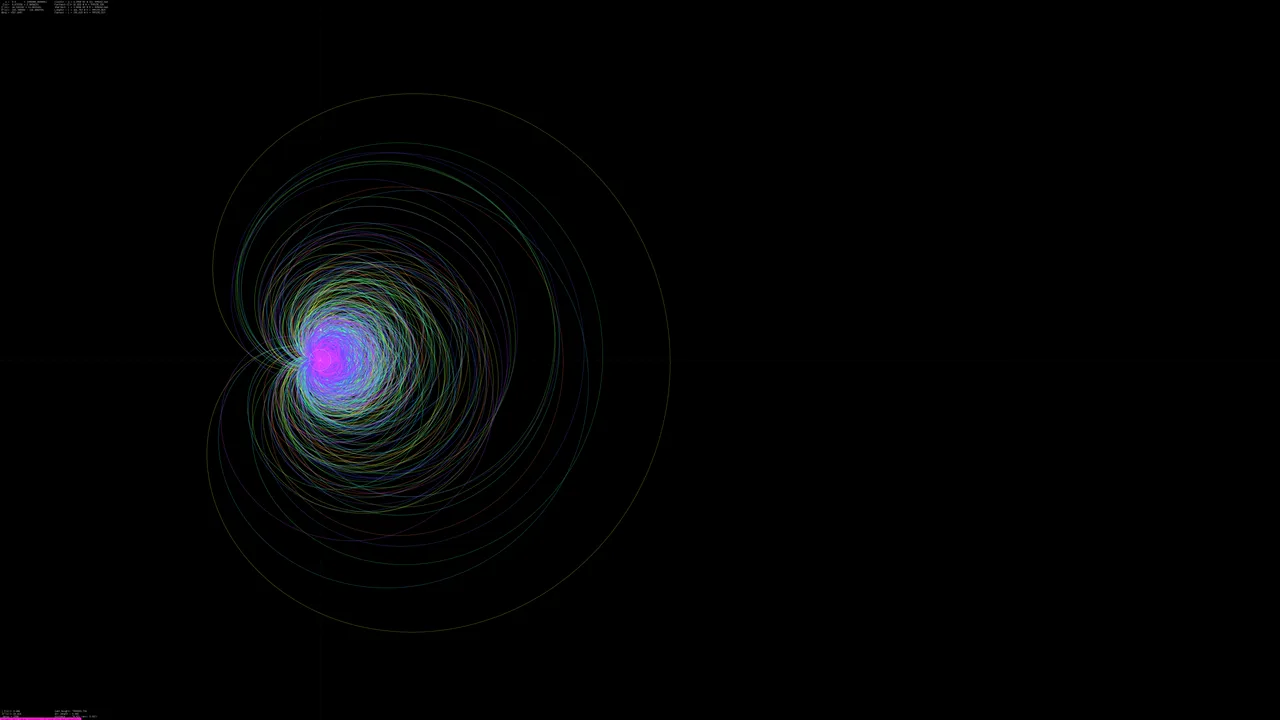
Cover image: A visualization of the Riemann zeta function spiraling along the critical line, by --MULLIGANACEOUS--, CC BY-SA 4.0, via Wikimedia Commons. Illustrative: it shows the function behind the Riemann hypothesis, not the AI proof itself.