A flaw in the software many companies use to manage their virtual servers was being used by attackers for more than two months before a fix existed. Google Threat Intelligence Group reports that a suspected PRC-nexus threat actor it tracks as ARMORY CASTLE, formerly UNC5221, exploited a zero-day in VMware vCenter in early September 2026. Broadcom disclosed and patched it on Nov. 19. This article reports what the researchers and vendors say. It is not security advice, so follow your vendor's own guidance for your systems.
What was disclosed
Sophos says Broadcom published an advisory on Nov. 19, 2026 for CVE-2026-123890, an authentication bypass in the VMware Directory Service component of vCenter, with a critical CVSS v3.1 score of 9.8. VMware Telco Cloud Platform and Telco Cloud Infrastructure are also affected. The U.S. Cybersecurity and Infrastructure Security Agency added it to its Known Exploited Vulnerabilities catalog on Nov. 20, per Sophos.
Rapid7 describes the bug in plain terms: an unauthenticated attacker can retrieve the session key for an in-progress administrator login to vCenter's directory service, then use it to complete the login without knowing the password. The attacker needs network access to TCP port 2012 and the name of an existing single sign-on account, Rapid7 says. Rapid7 reproduced the bypass on one vCenter Server Appliance build and chained it to command execution as root, and says no second vulnerability was needed once the attacker had administrative access.
What Google says the attackers did
Google's account is that ARMORY CASTLE exploited CVE-2026-123890 in early September 2026, based on forensic evidence, using a custom utility Google calls BONESAW. According to Google, the tool pulled the directory database, hijacked the vCenter token service that signs logins, and created a new administrator account. Google says the same group had earlier exploited a zero-day in BeyondTrust Remote Support, and in this case moved from that device to internal Linux appliances that lacked endpoint detection and response tools. Google counts two zero-days and three sets of malware in the campaign and says that points to "deep platform expertise and substantial resource backing." Attribution to a state-linked group is Google's assessment, a suspected link, not a proven one.
How the intruders moved
Google's report describes a patient intrusion. After getting into the BeyondTrust Remote Support device, the group scanned the internal network for ports used by VMware systems, including 2012, 9080 and 5480, then moved to Linux appliances inside the network. Google says it found two webshells, a backdoor and other utilities on those machines, plus a backdoor it had seen in an earlier intrusion by the same group. Google calls five of the malware families newly identified. Google "strongly" recommends that affected organizations apply Broadcom's patches immediately, and it published hardening and detection guidance for defenders.
A second flaw
SecurityTabs, an aggregator that cites Rapid7, reports that Broadcom released another advisory on Nov. 24 covering a second critical login bypass, CVE-2026-123903, in the same directory component, also rated 9.8. The same report says the coverage it reviewed did not describe exploitation of that second flaw. We have not confirmed this against Broadcom's own advisory, so treat it as secondary.
What we do not know
We do not know how many organizations were affected, or which sectors. The sources we read do not say. We also do not know whether other groups are now using the flaw, though CISA's listing means exploitation has been seen.
What to watch next
Watch for Broadcom's and CISA's updates on both vCenter flaws, for detection guidance from Google and Rapid7, and for any reports of exploitation by other groups now that the details are public.
Why it matters
vCenter sits at the center of many server rooms. A login bypass that gives administrator control, used quietly for months, shows how long an attacker can stay unseen on systems that often have no security agent installed. The practical step in every source is the same: apply Broadcom's patches, and check that the directory service port is not exposed to untrusted networks. This is a news summary, not security advice.
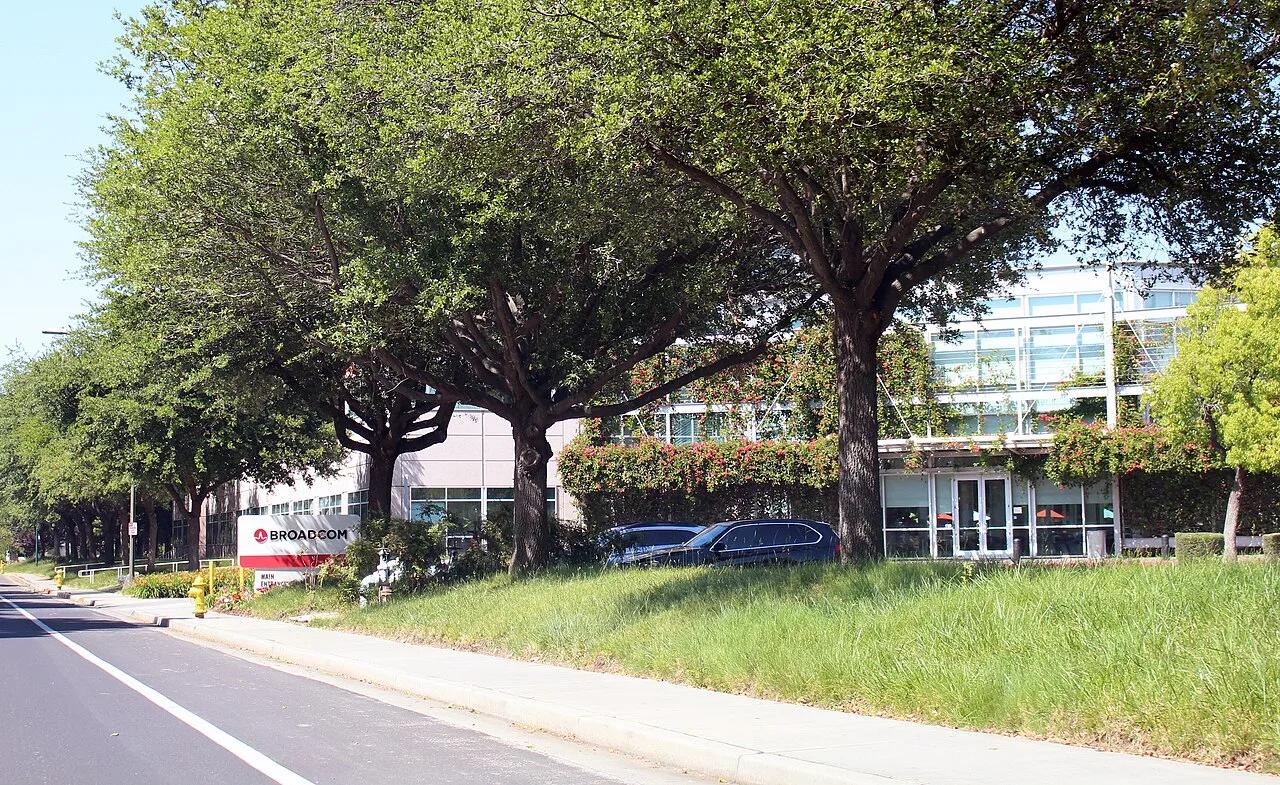
Cover image: Broadcom's headquarters campus in San Jose, photo by Coolcaesar, CC BY-SA 4.0, via Wikimedia Commons. Archive photo, Broadcom owns VMware but is not accused of wrongdoing.